Best AI Trading Apps for Beginners in 2026: 5 Easy Picks

Alice
June 18, 2026 · 10 min read

AI trading apps do more than show market data — they help users spot patterns, understand market moves, and decide what to do next. Compared to traditional investing apps, they are often better suited for individuals who want faster guidance, alerts, and easier decision support.
Try Bobby AI stock picks for free.
For newer traders and anyone looking for a more guided experience, the biggest advantage is simple: less guesswork, less stress, and an easier way to get started. In this guide, we compare the best AI trading apps in 2026, with a focus on ease of use, pricing, beginner support, and overall simplicity.
Top 5 AI Trading Apps Comparison
Want the short answer first? Use this table to quickly compare the best AI trading apps by ease of use, price, and who each app is best for.
| App | Best For | Price | Why Beginners Like It |
|---|---|---|---|
| RockFlow | Total beginners | Free | AI explains trading terms, market news, and stock moves |
| Tickeron | Signal-based beginners | Low-cost paid plans | Alerts and pattern tools |
| Streetbeat | Hands-off beginners | From monthly plan | Guided investing and portfolios |
| Trade Ideas | Experienced traders | Custom pricing | Powerful automation tools |
| Kavout | Stock discovery | Tiered pricing | AI stock ideas fast |
Best AI Trading Apps for Beginners: Our Top 5 Picks
If you want the easiest option to start with, focus on simplicity, beginner support, and how much guidance each app gives you from day one.
1. RockFlow — Best for Total Beginners
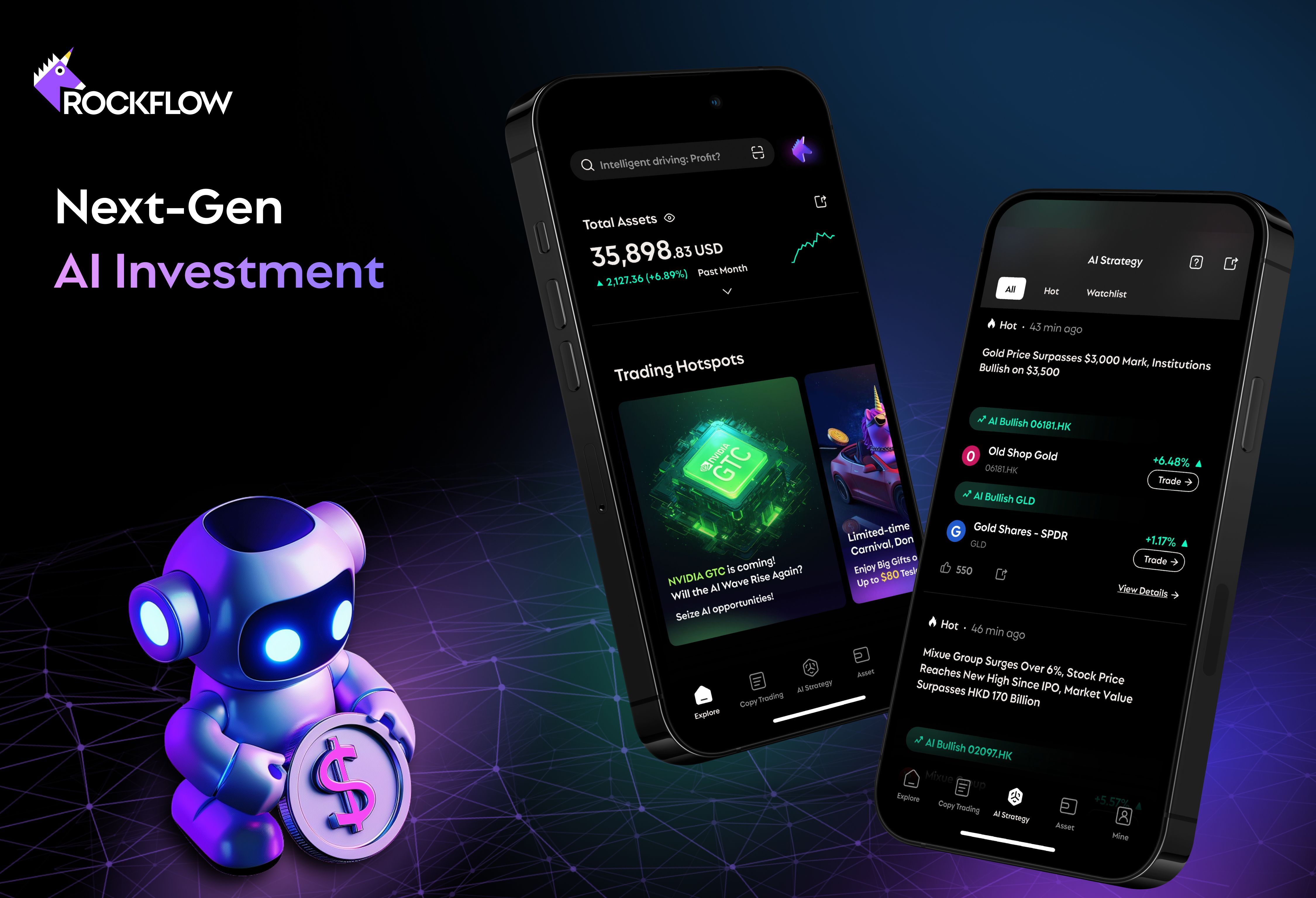
RockFlow is one of the best AI trading apps for beginners, and Bobby is a big reason why. Built into the RockFlow platform, Bobby is an AI investing assistant that helps first-time users understand market news, stock movements, and investing ideas in a simpler, more approachable way. If charts, market jargon, and nonstop stock news feel overwhelming, RockFlow makes the investing process easier to understand. It combines beginner-friendly design, plain-language market explanations, and guided tools that help first-time users get started with more confidence.
TradeGPT and Its Benefits
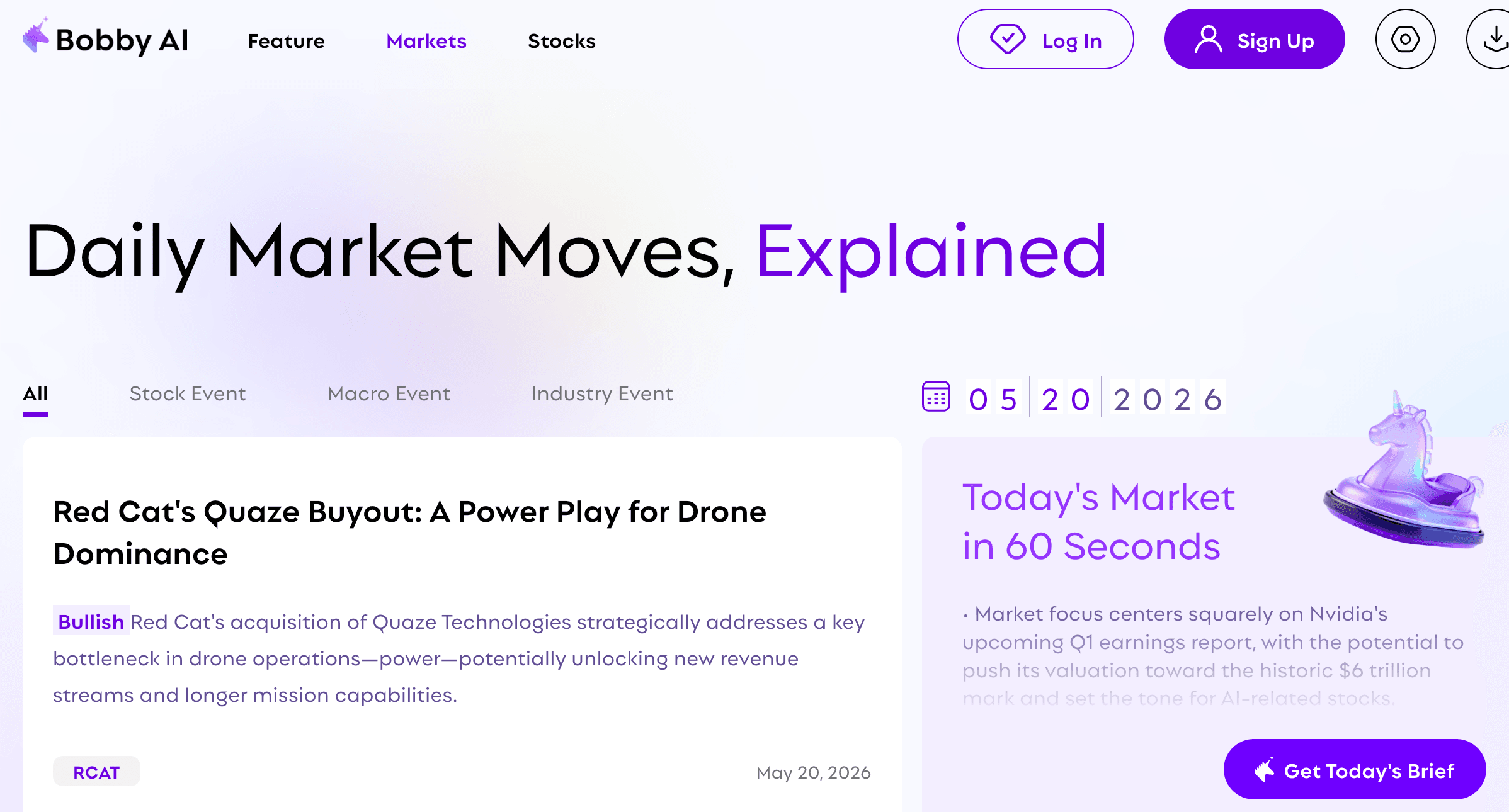
RockFlow has integrated TradeGPT’s capabilities into Bobby, creating a more unified AI assistant that helps users quickly make sense of daily market moves. By turning complex news and stock swings into clear takeaways, Bobby helps users understand what happened and why it matters without making them sift through headlines on their own.
Bobby: The Friendly Financial AI Agent
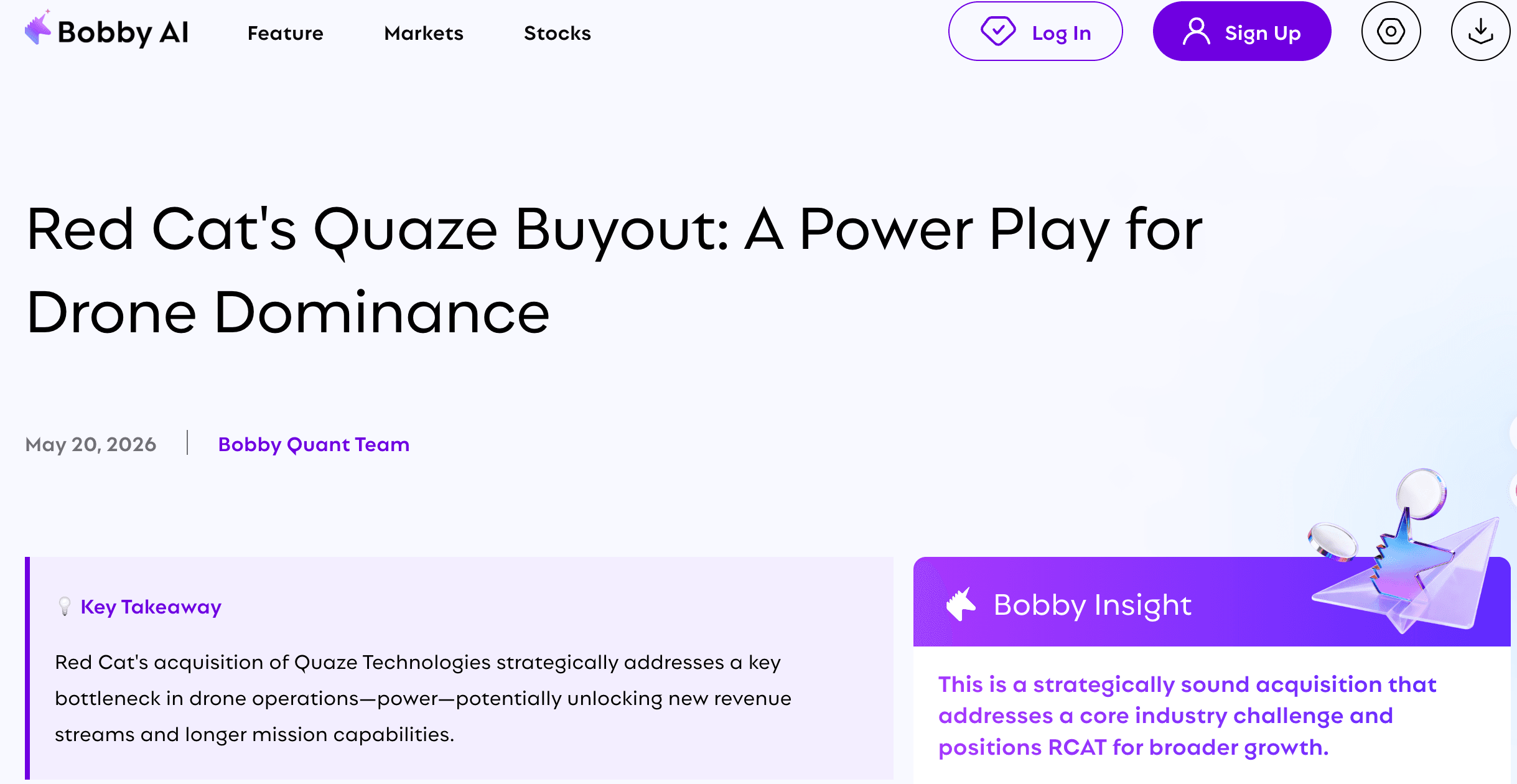
Bobby is RockFlow’s built-in AI investing assistant that turns market-moving news into clear, practical takeaways. Instead of leaving users to sort through headlines and jargon on their own, it helps them quickly understand what happened, why it matters, and what it could mean for their next move or for a stock they are watching.
Key Features
- Beginner-friendly design that makes the platform easy to approach from day one.
- TradeGPT lets users ask follow-up questions about news, trends, and investing ideas in plain language.
- Bobby highlights major market stories and explains what they could mean for stocks and investors.
- A more guided experience that reduces noise and helps users follow the market with less confusion.
Pros
- Very easy to use for first-time investors; for example, Bobby can show what a top market story may mean for a stock you own.
- Bobby and TradeGPT make market news and stock moves easier to understand; for example, they can explain in plain language why a stock is moving.
- More guided and less intimidating than many traditional investing platforms; for example, users can rely on curated highlights instead of filtering through headlines on their own.
Cons
- Advanced traders may want more technical depth and customization.
- The beginner-first experience may feel limiting for more experienced users.
- Mainly serves the US and Hong Kong stock markets.
Why RockFlow Works So Well for First-Time Users
RockFlow works especially well for first-time users because it feels modern, simple, and much easier to approach than many traditional investing platforms.
Its AI tools, especially Bobby, help users understand market-moving stories faster without needing to spend hours reading charts, reports, or long-form analysis.
If you want an AI trading app that feels beginner-friendly from day one, RockFlow is one of the strongest options. Sign up for Bobby and start investing smarter.
2. Tickeron — Best for AI Alerts
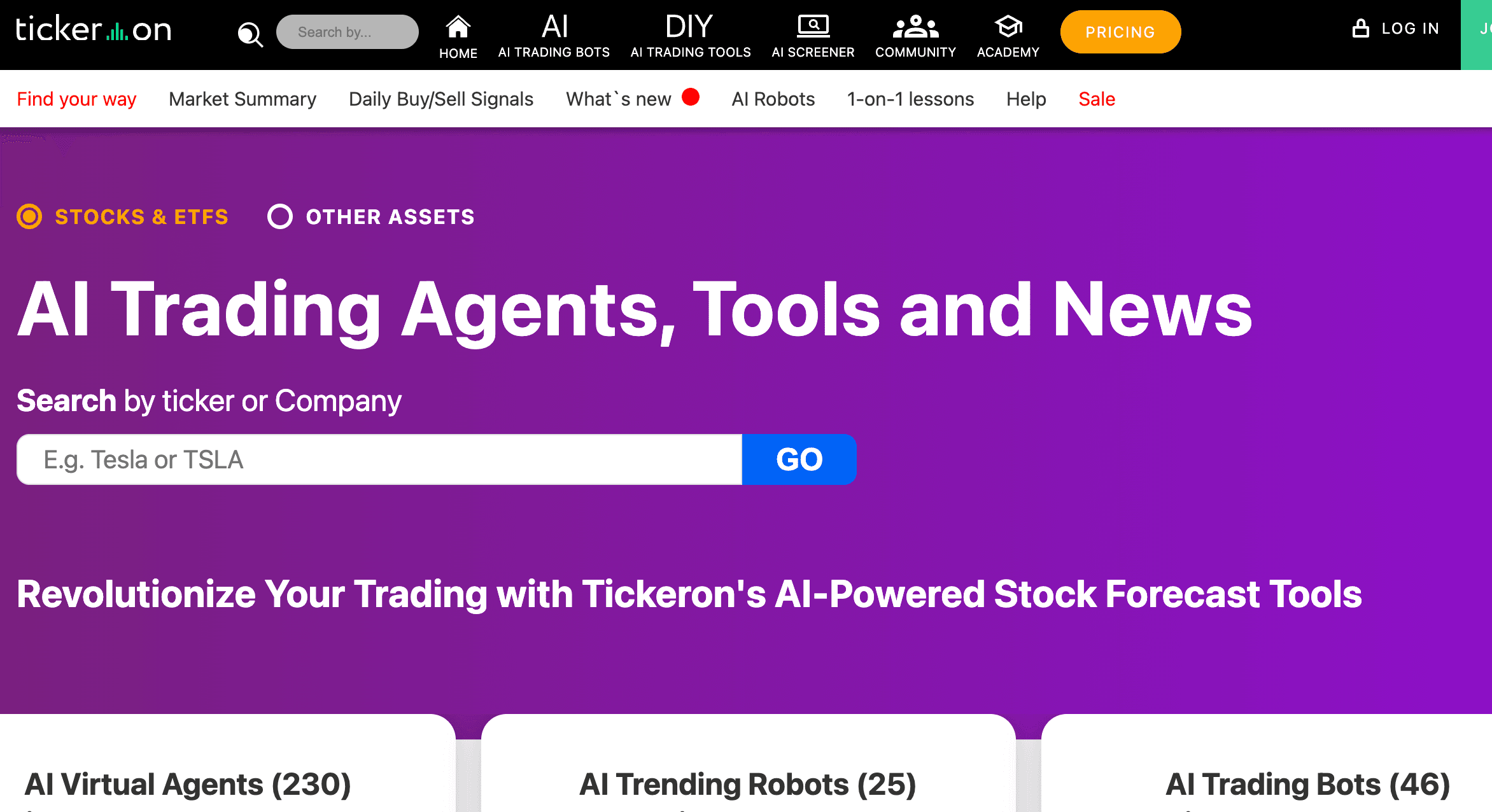
Tickeron is a good choice for beginners who like alerts, pattern signals, and data-driven tools. It can help users move faster, but it still feels more tool-heavy than beginner-first apps like RockFlow.
Key Features
- AI alerts for buy and sell signals.
- Pattern search tools for active traders.
- Community features like trader groups.
- Lower-cost entry than some advanced platforms.
Tickeron’s AI agents analyze market data and send alerts when trading patterns appear. That can save time, but beginners still need to understand how to read and use those signals.
Pros
- Useful for signal-based trading.
- Helpful alerts and pattern tools.
- Affordable compared with some advanced apps.
Cons
- Still requires some understanding of signals.
- Feels less guided for total beginners.
- More tool-driven than beginner-friendly.
3. Streetbeat — Best for Hands-Off Beginners

Streetbeat is a solid option for beginners who prefer a more hands-off, portfolio-based style. It is easier for passive investing than for users who want the simplest path into active AI trading.
Key Features
- Portfolio-based AI investing.
- Stocks and ETF guidance.
- Free trial for new users.
- Hands-off investing support.
Pros
- Good for passive beginners.
- Helpful for long-term portfolio building.
- Free trial lowers the barrier to entry.
Cons
- Less direct for active trading beginners.
- Better for guided investing than fast action.
4. Trade Ideas — Better for Experienced Traders
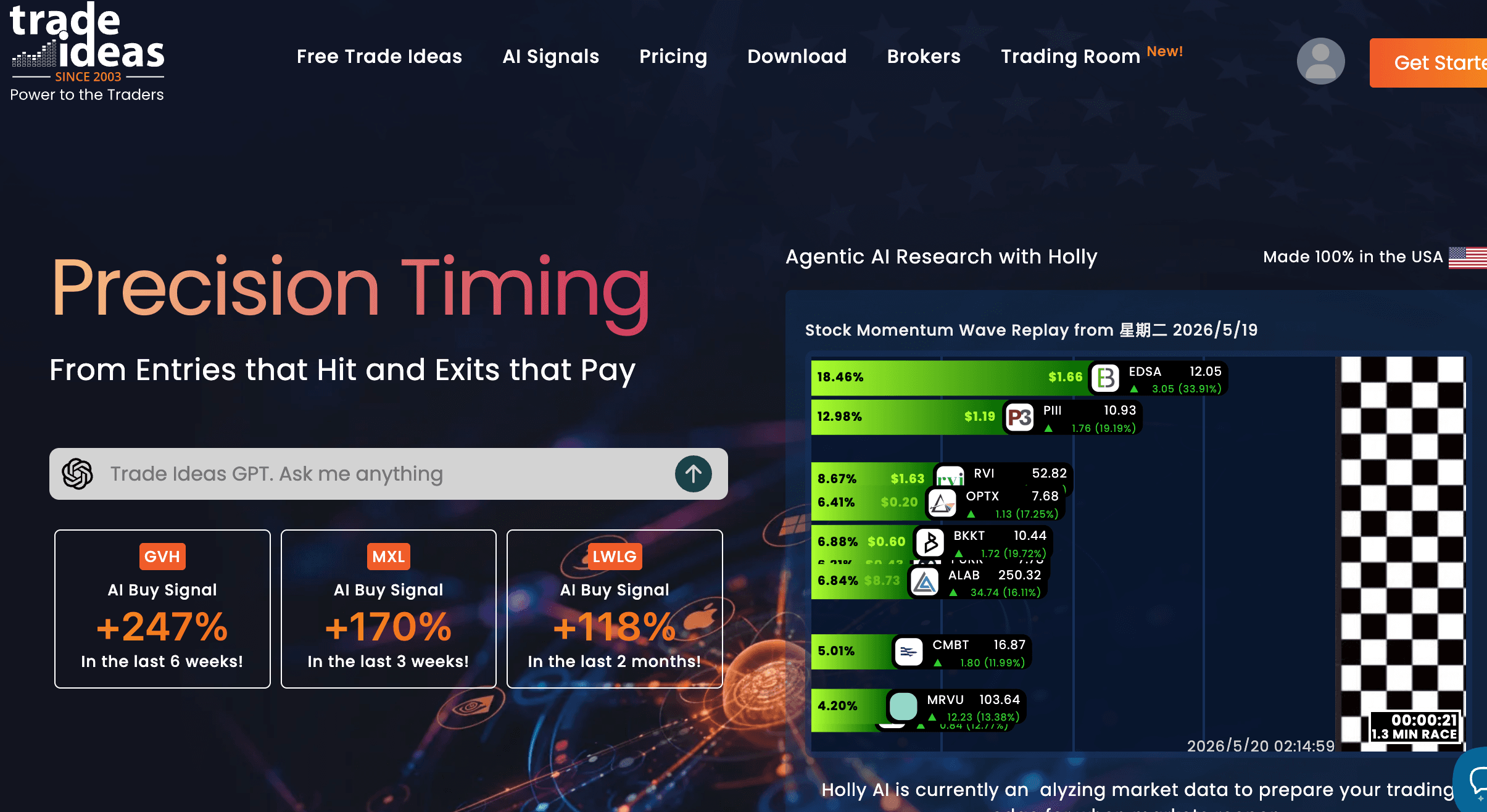
Trade Ideas is a powerful AI trading platform focused on automation and speed, but it is not the simplest choice for beginners. It is better suited to users who want live signals, momentum-based setups, and a more active trading style rather than a guided beginner experience.
Key Features
- AI-powered trading automation.
- Money Machine for momentum stock picks.
- TradeWave for live buy and sell signals.
- Built for fast-moving market opportunities.
Pros
- Strong automation for active traders, for example, Money Machine can identify top momentum stocks without manual screening.
- Real-time signals support faster decision-making, for example, TradeWave updates buy and sell alerts as the market changes.
- More advanced than many beginner platforms, for example, it offers trade-focused systems instead of only basic investing tools.
Cons
- Not ideal for first-time users, for example, beginners may find the platform too complex at the start.
- Less suitable for passive investors, for example, users looking for a hands-off experience may prefer simpler apps.
- Focused more on fast execution than guided learning, for example, it helps traders react quickly but does not simplify the market as much for new investors.
5. Kavout — Best for AI Stock Discovery
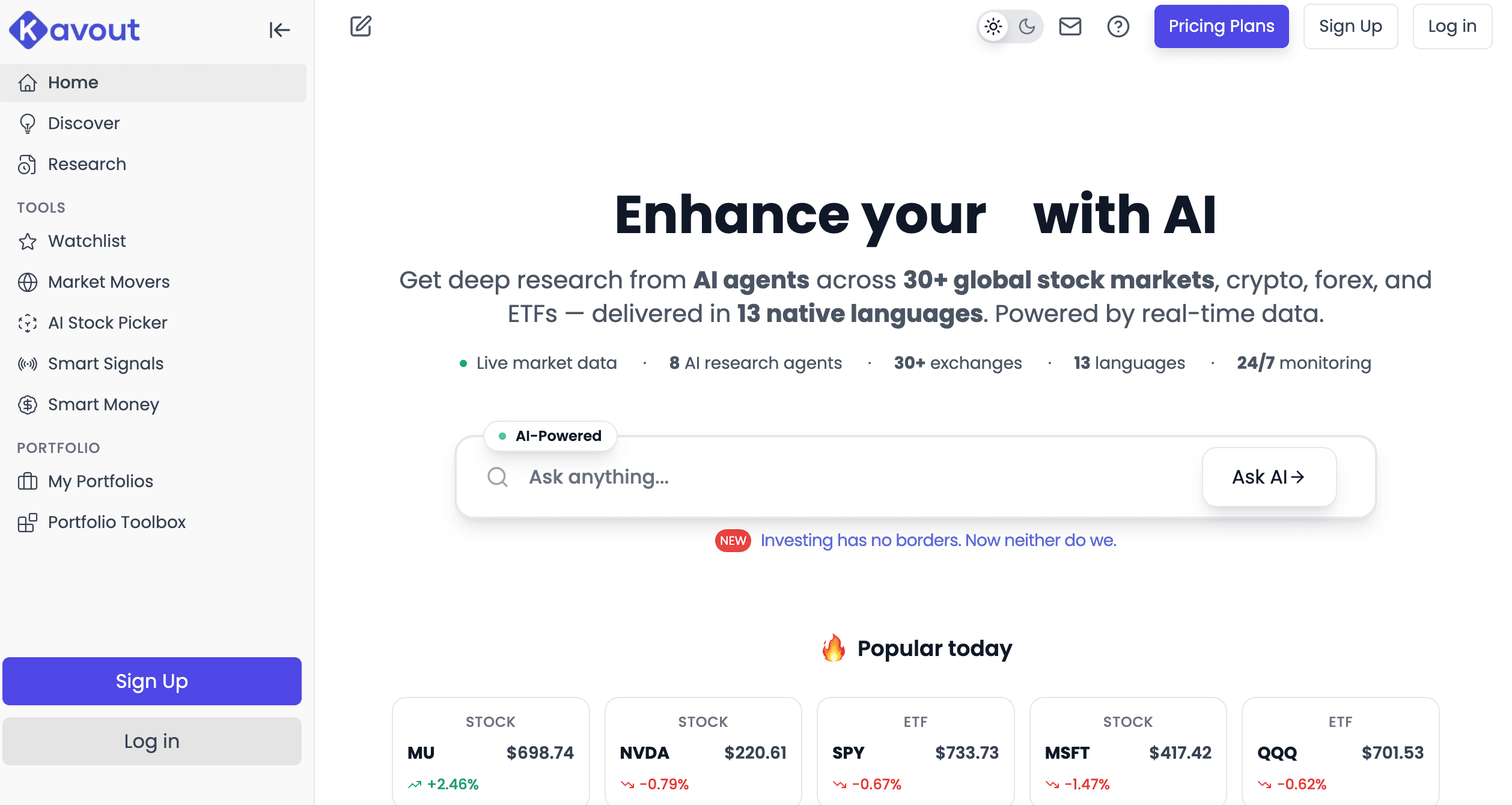
Kavout is useful for beginners who want AI help finding stock ideas quickly. It simplifies research, but it still feels more like a stock discovery tool than a fully guided beginner platform.
Key Features
- AI stock scoring.
- Fast stock discovery.
- Real-time updates.
- Market movers and signal tools.
Pros
- Good for discovering stock ideas quickly.
- Helpful scoring system.
- Useful if you already know basic investing terms.
Cons
- Less hand-holding for total beginners.
- More research-focused than beginner-guided.
How to Choose the Right AI Trading App as a Beginner
If you are just starting out, the best AI trading app is usually the one that feels easiest to understand on day one. Look for apps with simple menus, clear explanations, and beginner-friendly guidance. Some apps offer more tools, but more tools do not always mean they are easier for first-time users.
Price matters too, but ease of use matters even more if you are starting from zero.
Why Free Trials Matter Free trials help beginners test an app before spending money. They are a simple way to see whether the app feels easy, clear, and worth learning.
Match the App to Your Goal Pick the app that matches what you actually want. If you want the easiest start, choose a beginner-first app like RockFlow. If you want more signals and tools, options like Tickeron or Kavout may fit better.
For most first-time users, the best choice is the app that feels simple, guided, and low-pressure from the start. If that is what you want, RockFlow is one of the best places to begin. Download Bobby and start your AI trading journey.
FAQs About AI Trading Apps
Q1: What is the best AI trading app for beginners? The best AI trading app is the one that feels easy to use, explains things clearly, and does not require deep chart knowledge. For users who want the simplest experience, RockFlow is one of the strongest options because it combines guided tools, plain-language AI help, and an easy-to-use interface.
Q2: Is there a real AI trading app? Yes. Real AI trading apps use data analysis, pattern recognition, and automation to help users spot opportunities and make decisions faster. The experience can vary a lot, though, which is why beginner-friendly design matters.
Q3: Do I need to understand charts to use an AI trading app? Not always. Some AI trading apps are built to reduce the need for deep chart reading by offering alerts, summaries, and plain-language explanations. That said, having a basic understanding of how markets work can still help you use these tools more effectively.
Related Content